
On a recent job in Folsom, we found a pool valve that had rusted and was slowly leaking. It was buried in the landscaping beside the pool equipment, which made the leak easy to miss. We dug it out, installed a new check valve with fresh plumbing, and stopped the leak before it turned into a bigger, more expensive repair. Here is what we found, what a check valve actually does, and the signs that your own pool plumbing might be leaking.
What we found on this Folsom pool
The valve sat in the planting area next to the equipment, under soil and landscaping. Rust had worked through it, and water was seeping out a little at a time. Underground leaks like this are hard to spot because the water soaks into the soil instead of pooling where you can see it.
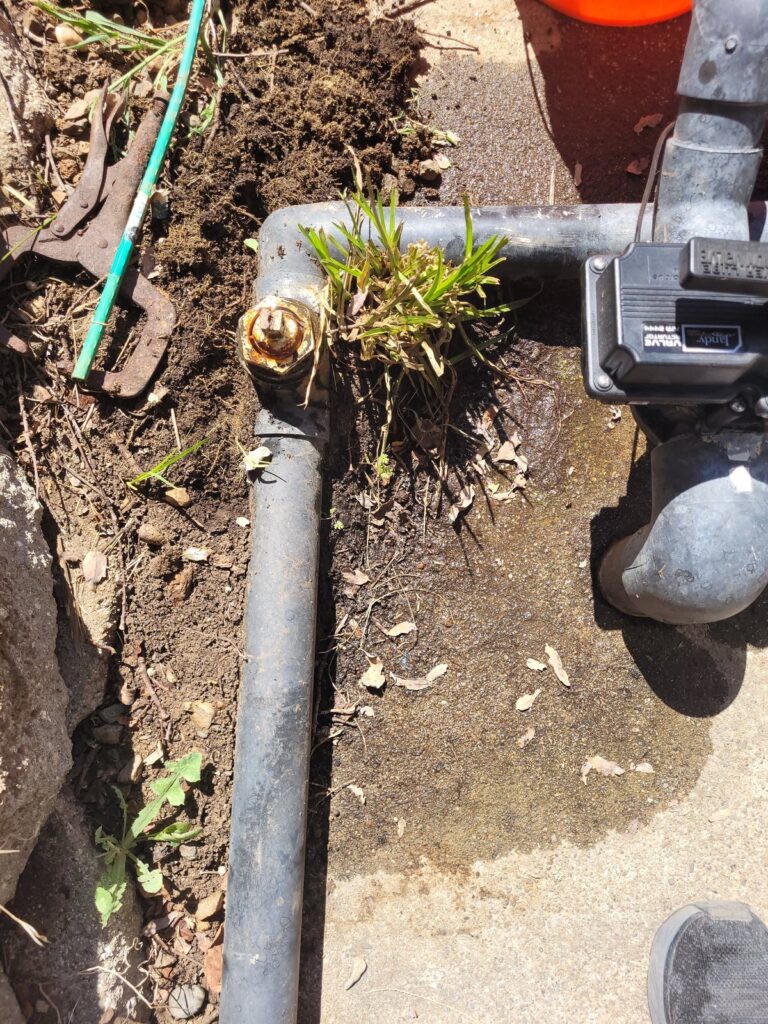
The fix: a new check valve and fresh plumbing
We dug the valve out, removed it, and installed a new check valve with fresh plumbing. Once everything was reconnected, the leak was gone.
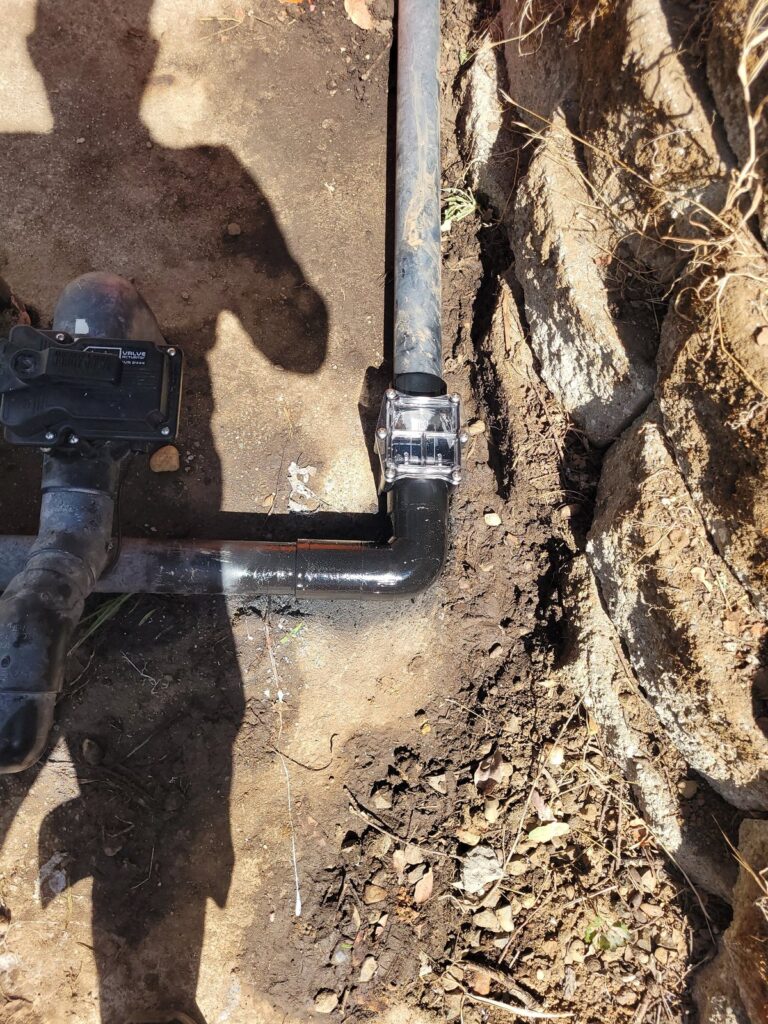
As a licensed pool contractor (CA Lic. #1145343), George, the owner, handles repairs like this himself. There is no hand-off to a separate repair company and no waiting on someone else’s schedule.
What does a pool check valve do?
A check valve lets water flow in only one direction. In a pool system, it stops water from draining backward through the plumbing when the pump shuts off. That helps the pump stay primed for its next cycle, and on pools with a chlorinator or equipment that sits above the water line, it keeps water and chemicals from flowing back where they should not go. When a check valve rusts, cracks, or leaks, you can lose water, lose prime, or both.
Signs your pool plumbing may be leaking
- Wet or soggy soil around the equipment when it has not rained or been watered
- The water level dropping faster than normal evaporation
- Air bubbles in the pump basket, or a pump that struggles to prime
- Rust, white crust, or drips around valves and fittings
- Topping off the pool more often than you used to
Folsom summers are hot, so some water loss from evaporation is normal. If your pool seems to be losing water faster than usual, or any of the signs above sound familiar, have the equipment and plumbing checked.
Why small leaks are worth fixing early
A slow leak does not fix itself. Water lost underground keeps soaking the soil around your equipment, makes your pump work harder, and wastes water and chemicals every week. Replacing one valve is usually far simpler than chasing a leak that has been left to grow.
Both of our monthly plans include an equipment check every visit, which is often how problems like this get caught before they become expensive. Learn more about our pool service in Folsom.
Pool equipment leaking in Folsom?
If your pool equipment is leaking, rusting, or making noise, text a photo to 916-534-0561 and George will take a look, usually the same week. We answer calls and texts Monday through Friday, 9am to 7pm.
See our pool equipment repair services, our pool pump repair page, or more before and after photos from real jobs.